
Sex Offender Checks in Clay County
The official starting point is the Iowa Sex Offender Registry. It covers public registrant information across Iowa and lets a reader search Clay County as a whole. That county view matters because a Spencer, Everly, or Royal postal address does not always match an incorporated boundary. Search first by name or county, then narrow by city, ZIP code, address, or radius.
The Clay County Sheriff registry page supplies the local verification route. Its notice warns that not every registrant appears and that an address can become stale if a person moves without reporting. The sheriff page described its local listing as monthly, while state law calls for corrected public information to reach the DCI site within five business days after the registry receives the correction. The two sources therefore serve different jobs: public search and local fact checking.
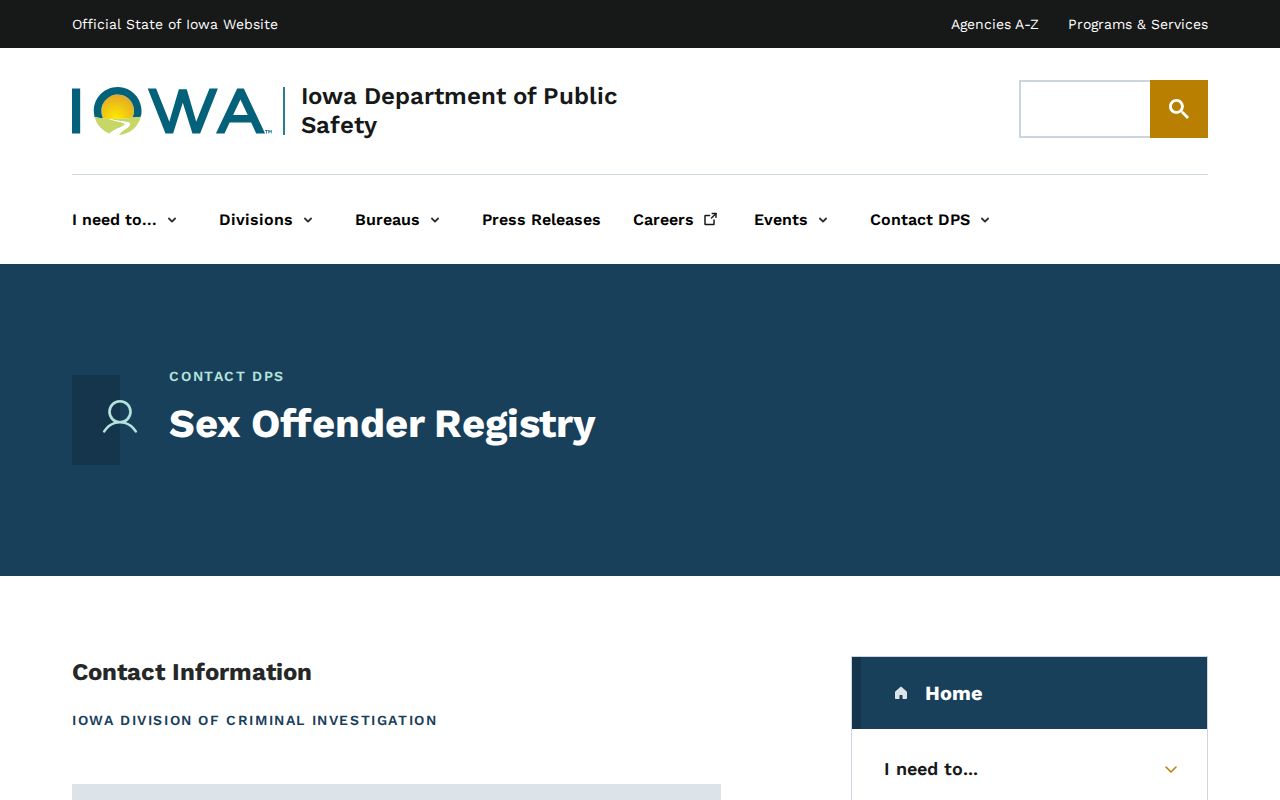
The county source shows how Clay County frames local checks.
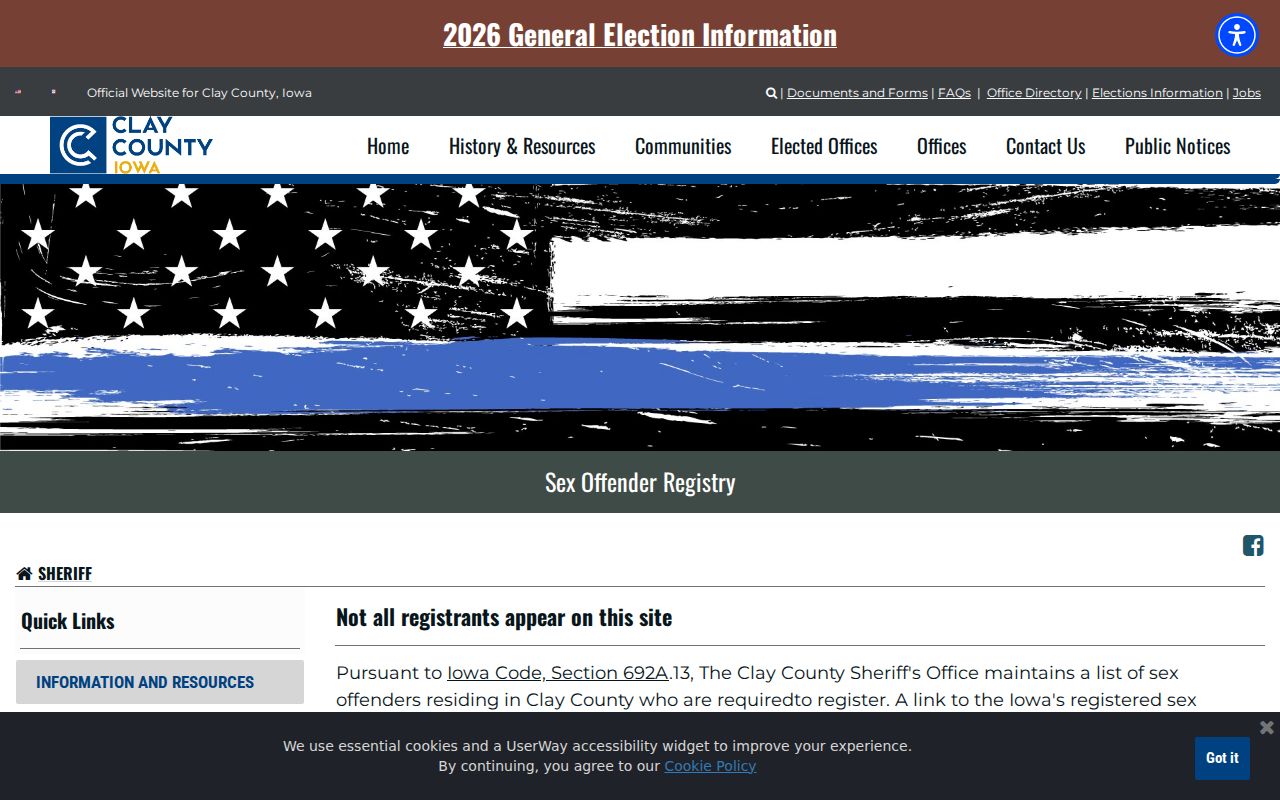
The image reinforces why a registry result should be checked with the office that performs local registration duties.
Clay County Registry Redesign
Iowa DPS launched a redesigned registry on August 22, 2025. The official launch notice identifies enhanced searches, interactive maps, active and most-wanted links, safety resources, and personalized notifications. Older screen shots may show tabs or CAPTCHA steps that no longer match the live tool. Use the current labels instead of following an archived set of clicks.
The launch page records that change in access.
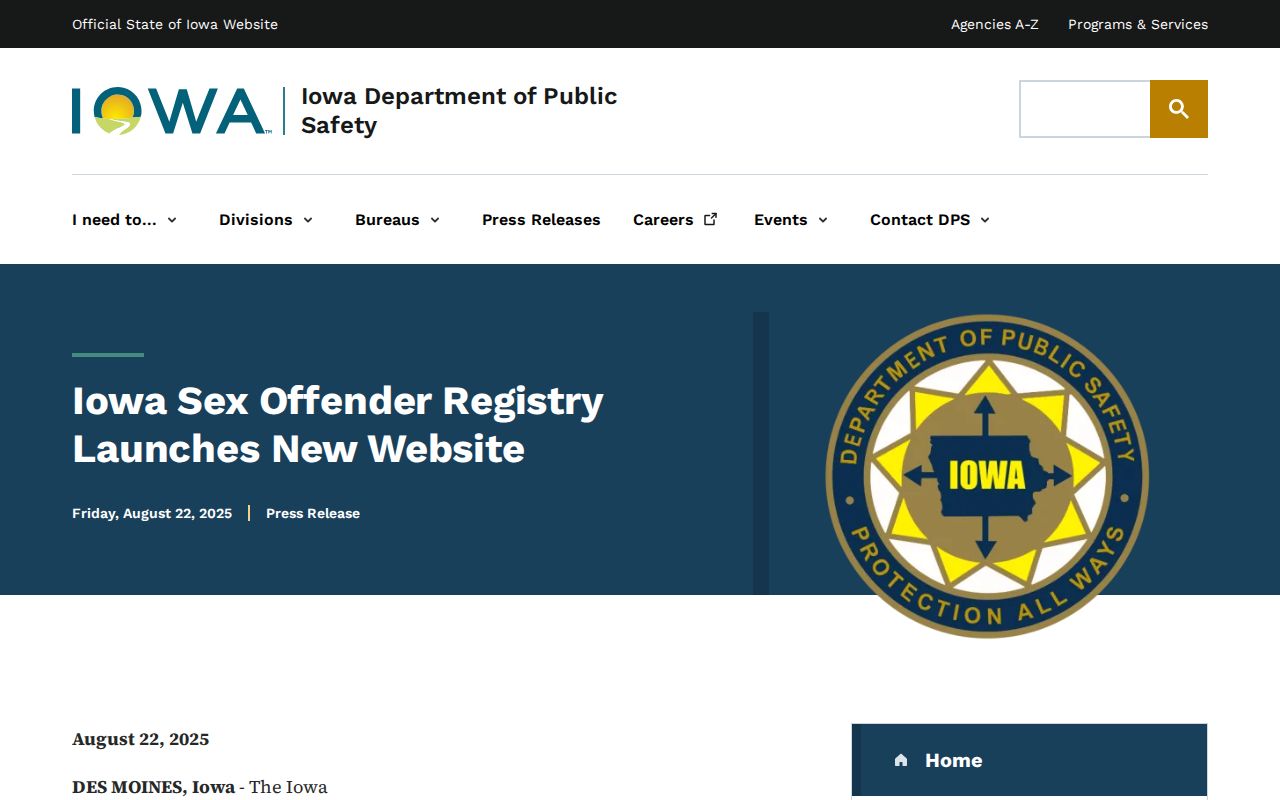
For a Clay County searcher, the key gain is the ability to combine a broad county check with map and notice tools rather than save a static result.
How to Search the Iowa Registry
Begin broad enough to catch a spelling or boundary issue. Aliases can produce more than one result, and city-only searching can miss an address just outside city limits. The registry is free, and no commercial people-search service is needed.
- Open the official Iowa registry and choose a name, county, city, ZIP, or address-based method.
- Select Clay County or enter the known name. Add Spencer, Everly, Royal, a ZIP code, or a radius only after reviewing the broad result.
- Compare the photograph, aliases, physical description, location, and status. Do not rely on a name match alone.
- Open the full profile and read the offense, jurisdiction, date, tier, and compliance fields separately.
The live Iowa registry interface is the source for these controls.
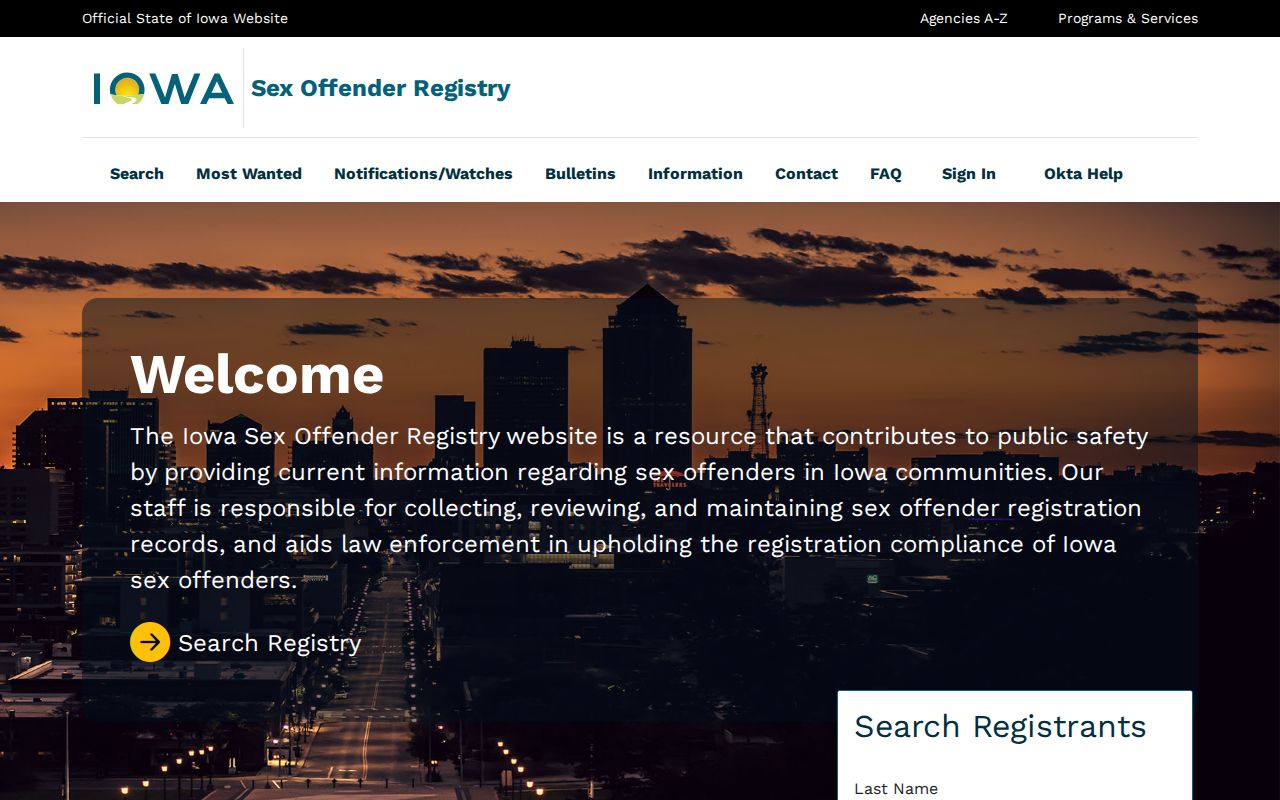
Its map and place filters make it possible to test more than one reasonable description of the same Clay County area.
| Field | Type | Required | Use |
|---|---|---|---|
| Name | Text | No | Search active public registrants |
| County | Dropdown | No | Select Clay |
| City | Text or dropdown | No | Try Spencer, Everly, or Royal |
| ZIP code | Text | No | Tests a postal area |
| Address and radius | Map control | No | Exact choices appear in the live tool |
| Active or most wanted | Link or filter | No | Routes to a defined status view |
| Notifications | Signup | No | Creates personalized alerts |
Clay County Radius Searches
County, city, ZIP, and radius are not duplicate controls. A municipal line, mailing city, and geocoded point can describe different areas. Start with Clay County when the concern is local, then test the city and a carefully entered street address. A map result depends on the address being geocoded correctly, so a blank map is not enough to end the check.
For movement beyond Iowa, use the U.S. Department of Justice National Sex Offender Public Website. NSOPW searches participating jurisdictions and is the right official second layer when a person may have lived across state lines.
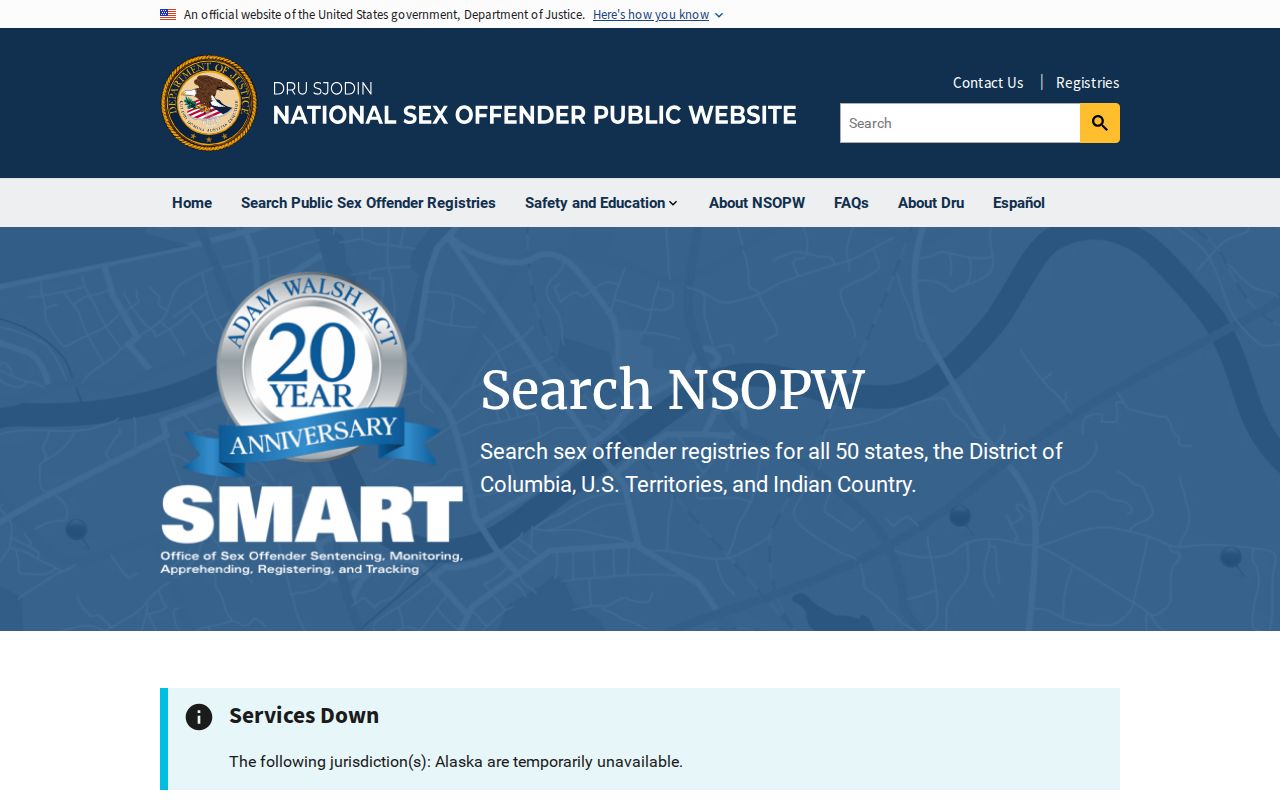
NSOPW supplements the Iowa system; it does not replace Clay County verification or explain an Iowa profile's local status.
Inside a Registry Profile
A public profile separates identity, registered location, underlying offense, and present compliance. Read each part. A photograph and physical description help distinguish similar names. Aliases show why one spelling may miss a match. An address reflects reported registry data at its last update, not a guarantee that a person is present at that spot now.
| Name and aliases | Legal name, nicknames, and other public names used for matching. |
|---|---|
| Photo and description | Photograph and public physical traits used to distinguish people. |
| Registered location | Address or location information Iowa law permits the public to see. |
| Offense record | Offense, statute, conviction jurisdiction, and date shown as separate facts. |
| Tier | Iowa classification under chapter 692A, not a stand-alone risk score. |
| Status | Registration or compliance status as reported to the system. |
Deferred sentences or judgments may still create a registration duty. That is one reason a registry profile and a conviction-only history can differ. The registry addresses current public notice; an Iowa court file supplies the case procedure and judgment.
Verify Clay County Registry Data
If a Clay County address seems wrong, save the profile URL and the date viewed. Call the Clay County Sheriff at 712-262-3221 and describe the factual mismatch. The sheriff and jail share the public-safety campus at 3115 West Fourth Street in Spencer. Posted sheriff administrative hours are weekdays from 8:00 a.m. to 4:30 p.m., excluding holidays.
State registry questions can also go to the DCI registry contact at 515-725-6050 or sorinfo@dps.state.ia.us.
Report the mismatch to law enforcement. Do not visit the address, confront a person, trail anyone, or publish an accusation.
Iowa Registration Levels and Requirements
Iowa Code chapter 692A answers several distinct questions. Section 692A.103 concerns who must register, section 692A.106 sets duration, section 692A.108 covers verification, section 692A.120 states sheriff duties, and section 692A.121 defines public access. A tier label alone does not answer every one of them.
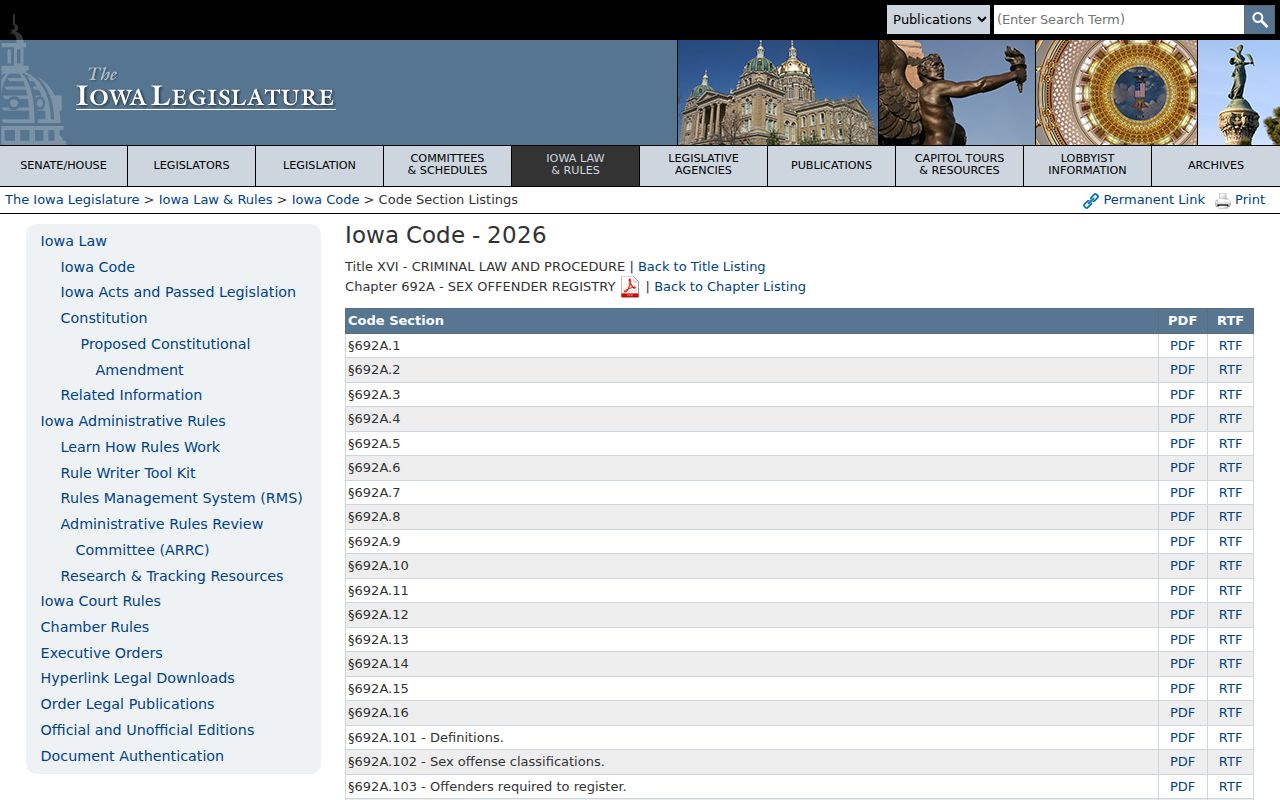
The current statute should be checked for offense-specific exceptions, tolling, and modification before drawing a duration conclusion.
| Iowa tier | General period | Important limit |
|---|---|---|
| Tier I | Generally 10 years | Offense rules, tolling, and exceptions still apply |
| Tier II | Generally 10 years for many Iowa offenses | Do not substitute the federal 25-year shorthand |
| Tier III | Lifetime | Enhanced checks and restrictions can apply |
Section 692A.102 controls classification offense by offense. Section 692A.107 covers tolling. Section 692A.114 includes rules tied to schools and child-care facilities, while section 692A.128 provides a route for certain modification requests. A Clay County public profile should not be used to guess facts the statute and court order do not show.
Clay County Registry Notifications
Personalized notice is more useful than keeping an old screen shot. The 2025 system added notification tools that can track changes based on the options offered by the live registry. Set the area carefully and keep the confirmation information. If the concern spans a city edge, use a county or radius scope instead of one city name.
Active and most-wanted links have narrower meanings than a general county result. “Most wanted” points to a noncompliance or featured enforcement route; it is not a list of all Clay County registrants. If a profile suggests noncompliance, pass the date, page address, and observed mismatch to the sheriff or DCI. Let law enforcement determine what happened.
Clay County Sheriff Registration Duties
The sheriff is the local registration and verification contact under Iowa's system. That role does not make the county page a complete substitute for DCI. The county office receives and checks local information, while DCI runs the public statewide database. A correction must move through the proper official channel before the public view changes.
Clay County Sheriff
3115 West Fourth Street
Spencer, IA 51301
712-262-3221
Weekdays, 8:00 a.m.-4:30 p.m., holidays excluded
Iowa DCI Registry Unit
State registry questions and corrections
515-725-6050
sorinfo@dps.state.ia.us
Clay County callers should state whether they are reporting an address concern, asking about registration procedure, or trying to correct public data. That lets staff route the contact without turning a safety report into a broad records request.
Community Notification and Lawful Use
Registry information supports personal, family, and neighborhood safety. It can help a resident plan routes, understand a notice, or monitor a chosen area. It is not proof that a listed person committed a new offense. The profile should be read for what it states, then checked against the official court file if the underlying case history matters.
Use registry information lawfully: Misusing registry information to threaten, harass, intimidate, or take other unlawful action can bring criminal or civil consequences. Follow Iowa Code chapter 692A and report concerns to law enforcement rather than confronting anyone.
Iowa Code section 692A.121 governs the public information. Chapter 692A also penalizes noncompliance by a registrant, but enforcement belongs to law enforcement and the courts. When a possible Clay County violation appears, report the facts and stop there.