
Checking Criminal History in Royal
Royal record access begins with evidence on the citation, complaint, or agency paperwork. A deputy's record belongs at the Clay County Sheriff. A trooper report belongs at Iowa DPS. A booking belongs at Clay County Jail, while a filed criminal case belongs to the Iowa court clerk. A city administrative or ordinance document may remain with Royal.
- Identify the responding agency and its report number.
- Ask that agency for the named report or recording.
- Call the county jail for current custody and booking facts.
- Search party name or case number under Clay County in Iowa Courts Online.
- Use DCI for Iowa-wide history or DOC for state correctional status.
This order follows record creation. It prevents a county jail clerk from being asked for a deputy's narrative or a court clerk from being asked for a booking photo.
Royal Records Start with Agency
Was the event a sheriff call, Iowa State Patrol stop, or city administrative matter? The answer selects the first custodian. For a sheriff event, call 712-262-3221. Give the Royal location, date and time, involved names, report number if known, and exact record wanted. Ask for inspection, electronic copy, paper copy, or certification and a cost estimate.
If a trooper created the report, use the Iowa DPS open-record route even when the person was booked and tried in Clay County. If agencies assisted each other, both may hold separate records. Requesting “the criminal record” without naming a report often sends the inquiry to the wrong desk.
Royal Police Department Records
A Royal city office may keep a local ordinance, citation, meeting, or other administrative file. That does not make it the custodian of a sheriff arrest report. No official Royal Police Department records form or law-enforcement database was documented. Confirm city custody before sending a request.
The event's function is a sound test. A city action stays local when no sheriff or state criminal process created another file. Deputy observations stay with the sheriff. Detention stays with the jail. Filed charges and judgments stay with the clerk. These distinctions are especially useful in Royal because residents rely on county infrastructure outside town.
When the town office does hold the record, ask for its present request channel and fee before sending a broad demand. When it does not, ask which agency received the matter. That one routing answer can prevent duplicate Royal requests to offices that never possessed the report.
Royal crime counts also demand a narrow reading. Choose the reporting agency and year in FBI Crime Data Explorer, check participation, and use raw totals before calculating a change. Royal's small population means a few incidents can create a large percentage swing. Sheriff figures may cover a broader county jurisdiction, so they should not be labeled as a town total or used as a simple safety rank.
Registry location searches present a separate boundary issue. Use Royal, ZIP, Clay County, and a radius in the official Iowa registry rather than trusting one city filter. For a suspected address error, save the profile URL and date and call the Clay County Sheriff. Public registry information supports awareness, but a listing is not proof of a new offense and should never lead to confrontation.
Royal Arrests and Clay Jail
Royal has no documented jail. Clay County Jail at 3115 West Fourth Street in Spencer handles county detention. Call 712-264-4242 for current public custody information. Have full legal name and date of birth ready, then ask about booking number, arresting agency, charge as booked, bond or hold, status, and next-court details.
No official county booking blotter, roster, or public mugshot gallery was confirmed. A telephone check is more reliable for fast-changing custody. The jail record shows intake and release facts, not the full investigation. It may also use an initial charge that later changes.
Royal to West Fourth Street
Royal residents need not travel before learning where a record is held. The sheriff and jail are at 3115 West Fourth Street. The clerk is at 215 West Fourth Street. Both can be called first. A report or booking inquiry belongs at the public-safety campus; a docket, judgment, or certified case copy belongs at the courthouse.
Geographic flow: Royal event › Spencer sheriff and jail campus › Spencer courthouse.
The County Attorney at 505 Second Avenue West reviews charges but is not the court-record custodian. Its office cannot give private legal advice. Separating these three Spencer addresses is a practical part of a Royal search.
Municipal Court Records in Royal
Royal does not have a separately documented municipal criminal case portal. Iowa routes filed criminal matters through its unified District Court system. Choose Clay County in Iowa Courts Online. A Royal address is not a court search field, so use the party's name or a case number.
| Court | Clay County District Court in Judicial District 3A |
|---|---|
| Case route | Filed state criminal matters enter Iowa's unified court system |
| Search key | Case number or party name with Clay County selected |
| Public fields | Charge, status, filings, events, hearings, disposition, and public financial entries |
| Official copies | Clay County Clerk, 712-262-4335 |
For older material, give the clerk the approximate year and name used at filing. Ask whether archive retrieval is needed.
Royal Cases in District Court
Search Iowa Courts Online by case number when possible. Name, case type, county, and date range can narrow a party search. Filing date is not always arrest date or offense date. A pending label means no final disposition is entered; it says nothing about guilt.
Docket events may include complaint, initial appearance, appointed-counsel order, arraignment, motion, plea, sentence, warrant, or cost payment. Not every entry has a free document. Ask the clerk for the docket sheet, trial information, judgment, sentence, dismissal, or certified copy by name.
Royal is a place tied to the event, not an Iowa Courts Online party-search field. Search Clay County first, then use a case number whenever one appears on a citation or later notice. If a name yields many results, add first name, case type, or date range. A court balance can reflect fines, costs, surcharges, restitution, or payments and is not the same as bond set for release.
Royal Warrants Need Verification
No official Royal or Clay County warrant name search was found. Call the sheriff and the clerk. A bench warrant may appear within a public court docket, while a sealed, investigative, recent, or recently cleared warrant may not. Web silence does not prove no warrant exists.
Someone addressing their own warrant should ask about appearance, surrender, bond, scheduling, and counsel. Do not travel from Royal to an office based on assumed procedures. Verify first, and do not treat an unofficial name list as authoritative.
Prepare full legal name, date of birth, and case number if known. Ask the clerk about a warrant tied to a visible docket and the sheriff about current releasable status. Arrest, bench, search, and fugitive warrants serve different functions. Some affidavits or unexecuted matters remain restricted, so request the precise public fact needed.
Where Royal Records Go
The responding agency keeps its report. The county jail keeps booking and custody data. Clay County District Court keeps the filed case and judgment. The clerk reports final disposition to Iowa DCI, where fingerprint-supported arrests may become part of statewide criminal history.
Record flow: Royal responding agency › Clay County Courts › Iowa Department of Public Safety, Division of Criminal Investigation.
A DCI search costs $15 per last name and requires exact date of birth plus first and last name. It is not a Royal report or complete docket. Without fingerprints, an arrest may not enter DCI at all. Without a signed release, older undisposed arrests and completed deferred judgments face special disclosure limits.
DCI offers online submission plus mail, fax, email, and in-person form channels. Phone requests are not accepted. Its “no Iowa history found” result is not a promise of no prior contact because it can also reflect protected information or confidential juvenile data. A person reviewing their own Royal-linked entry should compare the arresting agency record, the court case, and DCI. Each custodian corrects its own data rather than one office rewriting all three.
Royal Offenses and Court Levels
Iowa District Court handles the criminal classes that may arise from a Royal event. The current felony sentencing chapter supplies general felony provisions.
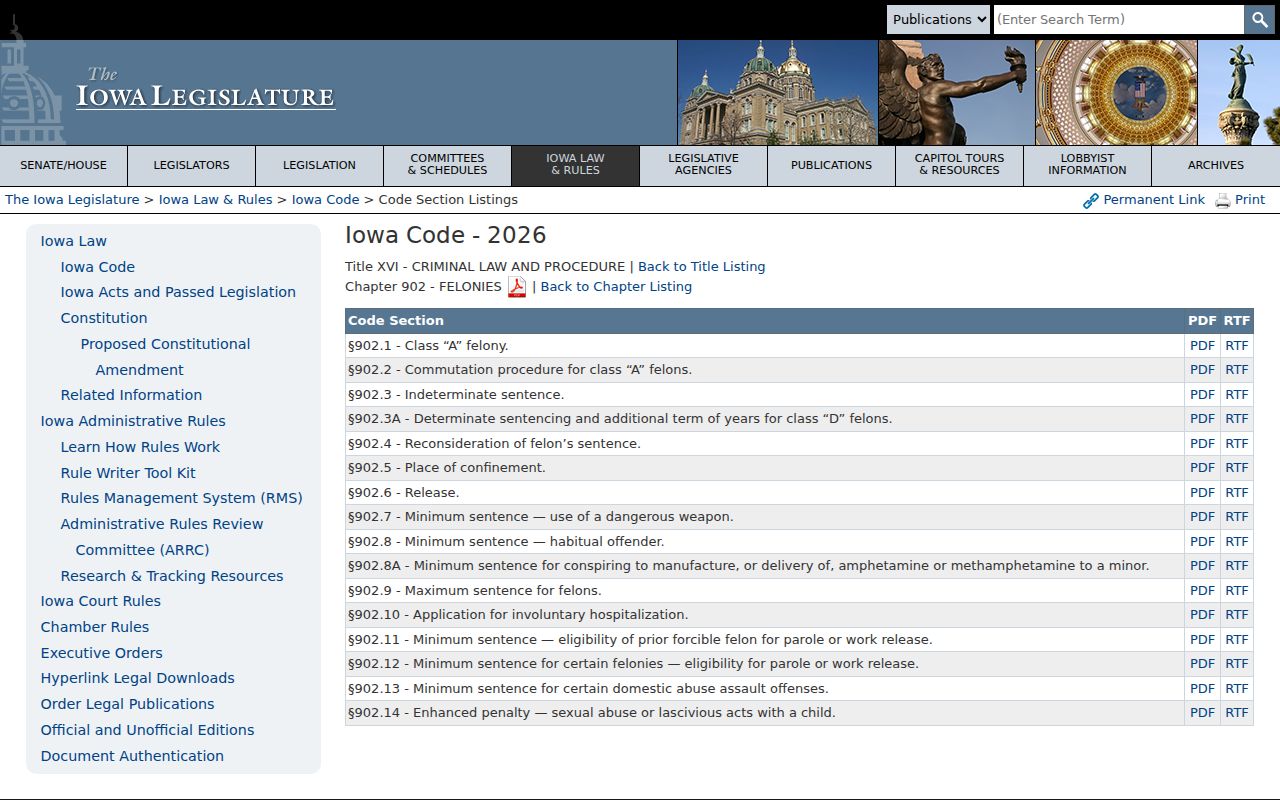
Class A through D felony limits can be changed by offense-specific rules, enhancements, and mandatory minimums. A docket's charge citation is more useful than a generic class chart.
The current misdemeanor sentencing chapter covers aggravated, serious, and simple misdemeanor provisions.
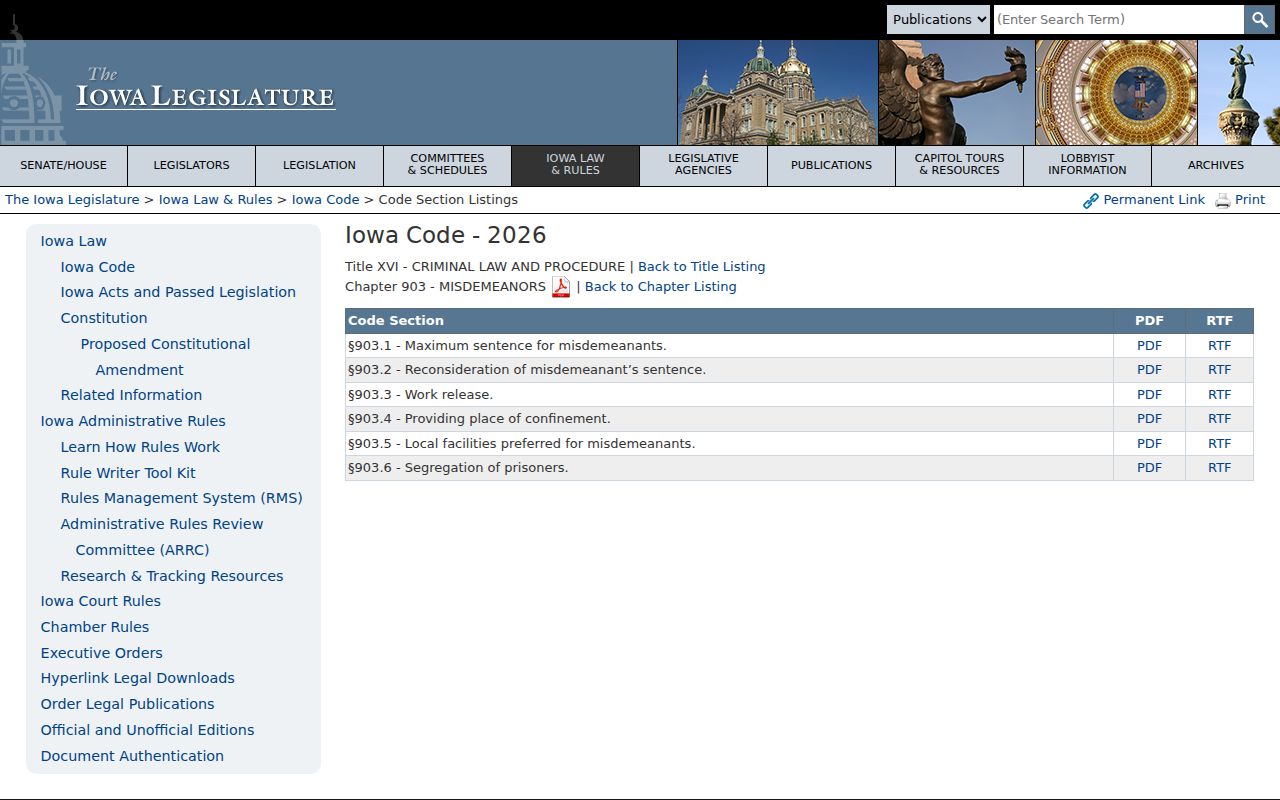
Dollar fine ranges can change. Read the live law and the actual Royal case rather than relying on an old summary.
Royal Record Clearing Questions
Iowa Code chapter 901C is the starting point for qualifying dismissals, not-guilty verdicts, and limited misdemeanor expungement. The current expungement chapter shows the controlling sections.
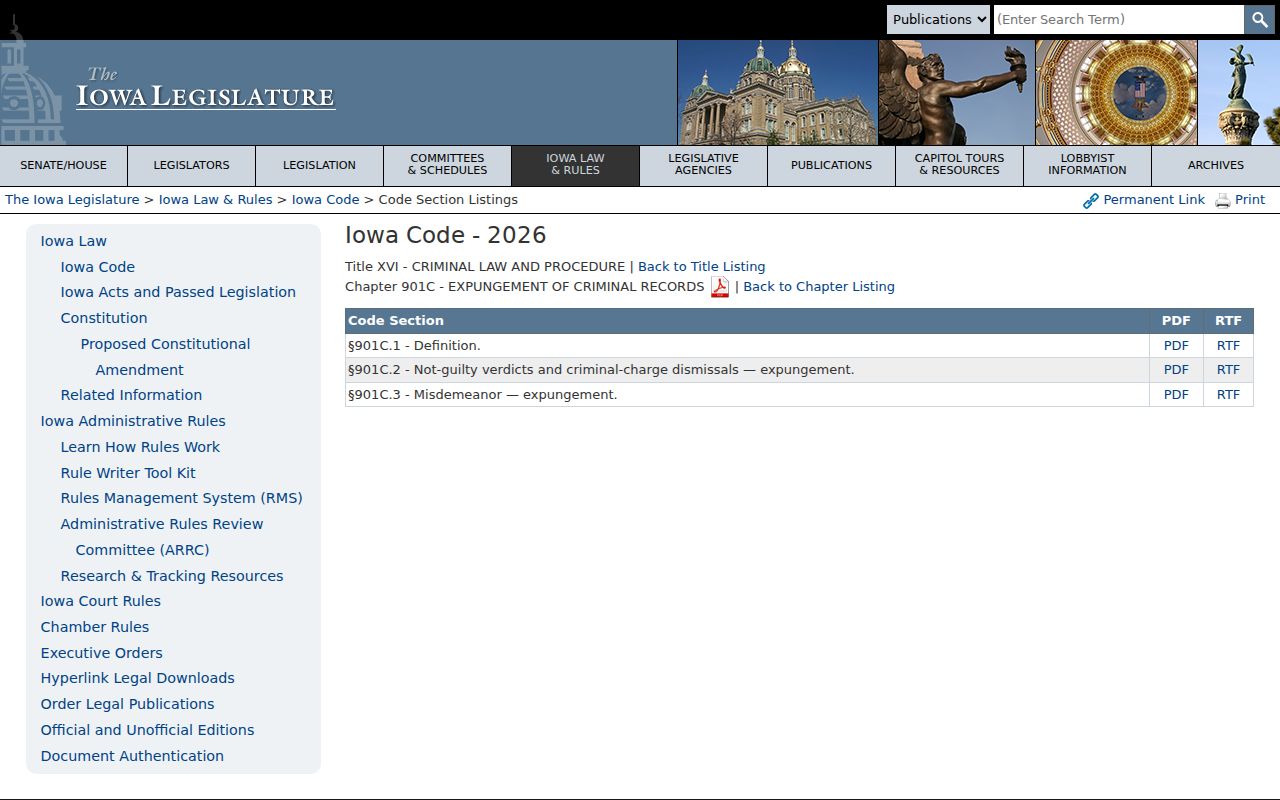
Retrieve the original court case, obtain the judgment or dismissal, and call the Clay County Clerk for current forms, filing method, and fee. Eligibility depends on the charge and result. A completed deferred judgment can be expunged at court yet remain in DCI as a discharged non-conviction released only with signed authorization.
Royal Correctional Status Beyond Jail
For state custody or supervision, Iowa Offender Search can use name, offender number, offense, location, sex, or Clay as county of commitment. County of commitment does not mean current residence, and the system updates weekly. For federal custody, use the Federal Bureau of Prisons locator.
A short Clay County jail stay may never be the right kind of record for either locator. Use the jail phone for local current custody.
If appointed counsel appears in a Royal court case, Iowa uses a statewide indigent-defense system. The State Public Defender office locator does not list a Spencer local office.
A defendant requests appointed counsel through the court's indigence process, not from the County Attorney.
Public Access Rules in Royal
Iowa Code chapter 22 governs public records held by local agencies. A Royal request should describe an existing record, not ask an office to conduct research. The custodian may charge a reasonable cost and redact active-investigation, juvenile, victim, medical, and other confidential information under section 22.7.
Key statutes: Chapter 22 governs inspection, copies, fees, and exceptions. Chapter 692 governs criminal-history dissemination, access, challenges, and penalties.
Ask for a separable public portion when a full report cannot be released. Court files go to the clerk rather than a sheriff records request. A denial should identify the legal ground.